What is home health care?
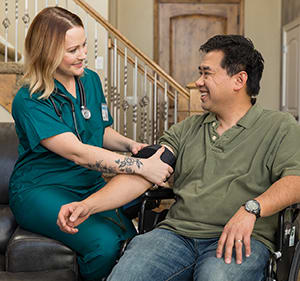
When you or a family member needs medical care, in some cases, this can be done at home instead of the hospital. This is known as home health care. It helps reduce the amount of time a person needs to be in a hospital. Home health care is done by a health care team that works toward a common goal to help the person needing care.
Home health care may be a choice for people who are:
- Recovering from an illness
- Having treatment
- Disabled
- Chronically ill
- Terminally ill
Home health care is not the right choice for everyone. In most cases, the person having care or treatment at home must be well enough to not be in a hospital.
Types of home health care services
There are many types of medical and social home health care services. A person may have one or more of these services:
- Doctor care
- Nursing care
- Physical, occupational, or speech therapy
- Medical social services
- Care from home health aides
- Homemaker or attendant care
- Companionship
- Volunteer care
- Nutritional support
- Medical equipment and supplies
- Laboratory and X-ray imaging
- Pharmaceutical services
- Transportation
- Home-delivered meals
Who provides home health care services?
Many types of agencies and companies provide home health care. They include:
- Home health agencies
- Homemaker and home care aide agencies
- Pharmaceutical and infusion therapy companies
- Durable medical equipment and supply dealers
- Staffing registries and private duty agencies
- Independent providers
Featured in
Date Last Reviewed: 01/01/2024
© 2000-2026 The StayWell Company, LLC. All rights reserved. This information is not intended as a substitute for professional medical care. Always follow your healthcare professional's instructions.
Related Articles
Patient Rights
If you are unhappy with the home health or hospice care you are receiving, you should notify the provider's administrator, your state health department, and the Better Business Bureau.
Hospice Care: Planning
When people begin to think about their own or their loved one's death, many spiritual and ethical issues arise. This can be a hard topic for the family and caregivers to talk about. They should listen and help sort through these issues.
Grief and Loss
Grief moves in and out of stages from disbelief and denial, to anger and guilt, to finding a source of comfort, to eventually adjusting to the loss.
Skilled Nursing Facility (SNF)
A skilled nursing facility is a place where people can stay who are medically stable but need more nursing care than is typically provided in an assisted living facility.