
Recovering from surgery
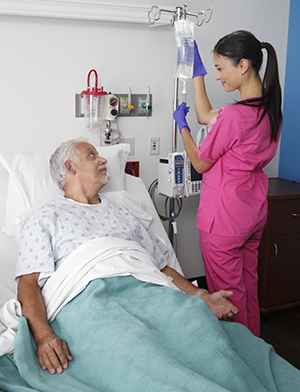
After surgery, you'll go to the recovery room. This also may be called the postanesthesia care unit (PACU). There, clinical staff will closely watch you as you recover from anesthesia. The length of time you'll spend in recovery depends on the type of surgery you had and your condition. While in recovery, the clinical staff may:
-
Watch vital signs, such as blood pressure, pulse, oxygen levels, and breathing
-
Watch for any signs of complications
-
Take your temperature
-
Check for swallowing or gagging
-
Watch your level of consciousness
-
Check any lines, tubes, or drains
-
Check the wound
-
Check IV (intravenous) infusions
-
Check your urine output
-
Keep you comfortable with pain medicine and body positioning
You can help your recovery by doing certain breathing and moving exercises in the recovery room. The staff will help you try the following:
-
Deep breaths. Lying flat for an extended time can cause fluids to build up in the lungs. Taking deep breaths using the entire diaphragm and belly can prevent pneumonia from developing.
-
Coughing. Coughing helps remove chest secretions. This also helps prevent pneumonia.
-
Turning. Changing positions while in the recovery bed helps stimulate circulation and deeper breathing and relieves pressure areas.
-
Foot and leg exercises. Moving the legs and feet stimulates blood flow. Depending on the type of surgery, you will be encouraged to bend the knee and raise the foot several times, to "bicycle" and to draw circles with your big toes. You may be asked to wear special elastic stockings to stimulate circulation.
What is intensive care?
In some cases, you may be moved to the intensive care unit (ICU) to be further and closely watched. This is most often needed if you need mechanical ventilation, or if you are recovering from a heart attack or major surgery. It's also needed if you go into shock, or if you develop organ failure, such as kidney failure. In the ICU, clinical staff closely watch you minute-by-minute. They'll use specialized equipment to watch your vital signs, including your heart rate.
Featured in
Date Last Reviewed: 04/01/2022
© 2000-2026 The StayWell Company, LLC. All rights reserved. This information is not intended as a substitute for professional medical care. Always follow your healthcare professional's instructions.
Related Articles
How to Empty Your Drain After Surgery
Here are images showing how to empty your drain after surgery.
Discharge Instructions: After Your Surgery
Here are some tips for feeling better and getting well after surgery.
Wound Check After Surgery, No Complication
If your wound was sewn closed, you shouldn't have to change the dressing more than twice a day in the first few days. Follow these home care instructions after your wound check.
Incision Care: Abdomen
Dressing your incision helps keep it clean, dry, and infection-free. That way it will heal faster. Here are steps to follow.