Types

Pressure Injuries: Common Sites

Choose a preferred language

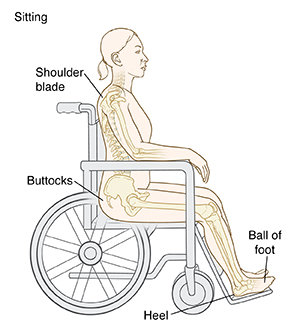
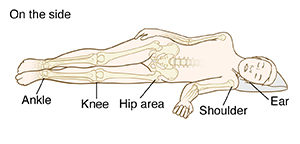
Bony prominences are the areas of bone that are close to the skin's surface. These areas are most susceptible to pressure injuries because they have the least amount of cushioning. They are also more vulnerable to friction and shear injuries. Which pressure points are vulnerable for a particular patient depends on the position in which most of that patient’s time is spent. Also check for pressure injuries on the skin over implanted medical devices, such as pacemakers.

Overall, the sacrum is the most common site for pressure injuries. Pressure injuries are also commonly seen on the:

  • Heels

  • Ischial tuberosity

  • Greater trochanter

  • Back of the head

  • Shoulders

  • Ears

  • Elbows

  • Inner knees

  • Malleoli (particularly the lateral malleolus)


Pressure points to remember
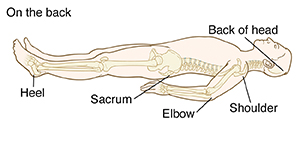
Outline of person lying on back with bones visible. Pressure points: Back of head, shoulder, elbow, sacrum, and heel.

Outline of person sitting in wheelchair with bones visible. Pressure points: Shoulder blade, buttocks, ball of foot, heel.

Outline of person lying on side with bones visible. Pressure points: Ear, shoulder, hip area, knees, ankle.

© 2000-2026 The StayWell Company, LLC. All rights reserved. This information is not intended as a substitute for professional medical care. Always follow your healthcare professional's instructions.
Related Articles
Read article
Skin Health
Understanding a Lipoma

A lipoma is a lump under the skin that's made of fat. It's not cancer (benign). Learn more about how lipomas occur, symptoms, treatment choices, and possible complications.

Read article
Skin Health
Molluscum Contagiosum (Adult)

Molluscum contagiosum is a common skin infection that is caused by a pox virus, results in raised, flesh-colored bumps on the skin.

Read article
Skin Health
Discharge Instructions for Pressure Injury

Learn what you can do to prevent, watch for, and help heal pressure injuries.

Read article
Skin Health
Flea, Mite, or Chigger Bites

Learn what to do if you have flea, mite, or chigger bites.