Cortisone is a type of steroid. It can greatly reduce swelling, redness, inflammation, and pain. Being injected with cortisone is simple and doesn’t take long. Your healthcare provider may ask you questions about your health. Cortisone can affect certain health conditions, such as diabetes.
Why have a cortisone injection?
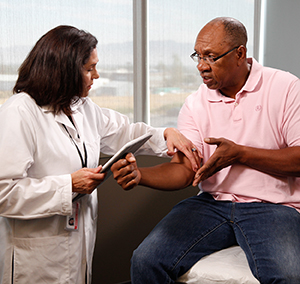
Injecting cortisone can sometimes relieve pain for anything from a sports injury to arthritis. Your healthcare provider may suggest an injection if rest, splints, physical therapy, rehabilitation exercises, or oral medicine doesn’t relieve your pain. Injecting cortisone is simpler than having surgery. And cortisone may provide the lasting pain relief that can help you get out and enjoy life again. Be sure to discuss all choices with your healthcare provider. Injections are usually used no more than 3 to 4 times a year in 1 area of the body.
Getting the injection
Your healthcare provider will start by cleaning and possibly numbing your skin at the injection site. Next you’ll be injected with local anesthetics (for short-term pain relief) and cortisone. The injection may last a few moments. A small bandage will be put over the injection site. You’ll then be ready to go home.
After your injection
After being injected, make sure you don’t injure the treated region. But stay active. Enjoy a walk or some other mild activity. Just be careful not to strain the region that gave you trouble.
The next day
Some people feel more pain after being injected. This is normal, and it will go away soon. Applying ice for
Cortisone injections and diabetes
Cortisone injections can increase your blood sugar for several days after the injection. If you have diabetes, watch your blood sugar closely during this time. Follow your regular plan for what to do when your blood sugar is elevated.
Find the Right Orthopedic & Sports Medicine Specialist for You
BLANCHARD VALLEY HEALTH SYSTEM
Ortho LinkRelated Articles
First Aid: Sprains and Fractures
A sprain happens when ligaments, the fibrous tissues that connect bones at a joint, pull or tear. A fracture may happen when a bone is hit with more force than it can bear. Learn about first aid for a sprain or fracture.
Laminectomy
Laminectomy is a surgery that removes the part of the vertebra called the lamina. Here's a look at what you can expect before, during, and after the procedure.
Shoulder Arthroscopy: Conditions Treated
Arthroscopy is used to diagnose and treat shoulder problems. Conditions treated by shoulder arthroscopy include impingement, torn rotator cuff, stretched capsule, torn labrum, arthritis, and loose bodies.
Knee Arthroscopy
Arthroscopy is used to diagnose and treat knee problems through several small incisions in the knee.