Now that you’re pregnant, you may be concerned about how asthma will affect your health and the health of your baby. But asthma doesn’t have to stop you from having a healthy pregnancy. Managing your asthma can keep you and your baby healthy.
Why managing asthma during pregnancy is important
When you’re pregnant and have an asthma flare-up, it affects both you and your baby. The baby gets oxygen from your blood to grow and develop normally. Severe asthma can cause problems getting oxygen to your baby. When asthma isn’t controlled, problems that can develop include:
-
Baby being born too early (prematurity).
-
Needing to deliver by C-section.
-
Having high blood pressure or preeclampsia.
-
Baby being smaller than normal.
-
Low blood sugar in the baby and seizures.
-
Birth defects.
Work with your doctors to manage your asthma
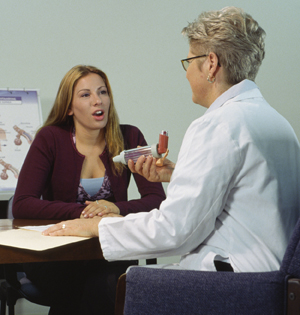
You likely have a doctor who helps you manage your asthma. During your pregnancy, continue to see this doctor regularly. They can continue to keep track of your asthma and adjust your medicines as needed. Be sure that this doctor is in contact with the doctor or midwife who is caring for your pregnancy. Also be sure to tell all of your health care providers what asthma medicines you take. If you don’t have a doctor managing your asthma, tell your doctor or midwife.
Prevent flare-ups
Here are tips to prevent flare-ups:
-
Continue using asthma medicines as prescribed. Follow your doctor’s directions about using asthma medicines. These will likely be inhaled medicines. These have little or no chance of harming you or your baby.
-
Keep track of your lung function. Lung function tests help measure how well your lungs are working. The test results tell you and your doctor if you are getting enough oxygen. You may be tested at your doctor’s office or at a hospital. You may also be directed to keep track of yourself at home. This is done using a peak flow meter. Your doctor will tell you when and how often you need to use the meter.
-
Control asthma triggers. These are things that cause your airways to react and lead to an asthma attack (flare-up). Triggers can include smoke, scents, and chemicals. They also include allergies to things like pollen, pets, and dust mites. A flare-up can also be set off by exercise, changes in the weather, and a cold or the flu. To prevent the flu, get a flu shot. If you’ve been getting allergy shots, you should continue to do so. But you should not get allergy shots for the first time when you’re pregnant.
Keep track of the health of your baby
Your doctor or midwife will keep track of your baby’s health closely during your pregnancy. If your asthma is not well controlled, this becomes even more important. So keep all your prenatal appointments. Keeping track includes:
-
Regular ultrasound tests. An ultrasound is a safe test that provides an image of your baby in the uterus. The ultrasound shows your baby’s development, including if the baby’s organs are growing normally.
-
Fetal nonstress test. This test may be done when you are around your third trimester. It checks if your baby is receiving enough oxygen by keeping track of the baby’s heart rate. Normally, a baby’s heart rate goes up when the baby moves. If the baby’s activity is low, it may mean that the baby isn’t getting enough oxygen.
-
Fetal movement counting. You may be asked to track your baby’s movements by doing fetal kick counts. This is done by counting the number of movements (kicks) that the baby makes over a certain time. Your doctor or midwife will let you know how often to count. You’ll also be told when you should contact them. If the baby’s movement pattern changes or decreases, more tests will likely be done to check the baby’s health.
Know your plan for labor and delivery
Before your due date, talk with your doctor or midwife about your labor and delivery plan. You will likely keep taking your asthma medicines during this time. These prevent a flare-up. They can also help relieve a flare-up if you have one. Your doctor or midwife will tell you more about this.
When to contact your doctor
Contact your doctor or midwife right away if:
-
You have wheezing that doesn't go away after you take medicine.
-
Your asthma medicines stop working.
-
You cough up bloody, green, or yellow mucus (signs of a lung infection).
-
You have a temperature above
100.4 °F (38 °C) with shortness of breath or a cough. -
Your baby’s movement pattern changes or decreases.
Online Medical Reviewer: Donna Freeborn PhD CNM FNP
Online Medical Reviewer: Heather M Trevino BSN RNC
Online Medical Reviewer: Irina Burd MD PhD
Date Last Reviewed: 07/01/2025
© 2000-2026 The StayWell Company, LLC. All rights reserved. This information is not intended as a substitute for professional medical care. Always follow your healthcare professional's instructions.

Related Articles
Back Pain During Pregnancy: Moving Safely
Learning the correct ways to bend, lift, and carry objects may help relieve back strain. It will also help you protect your back after your baby is born. Remember, if you’re having trouble protecting your back, it’s OK to ask the people around you for help!
Folic Acid for a Healthy Baby
Getting enough folic acid can reduce the risk for neural tube defects (NTDs) and may also reduce the risk for other serious birth defects of the brain and spinal cord.
Adapting to Pregnancy: Second Trimester
Keep up the healthy habits you started in your first trimester. You might be a little more tired than normal. So plan your day wisely. Look at the tips below and choose the ones that suit your lifestyle.
Healthy Weight Loss After Pregnancy
Eating healthy and being physically active can get you back in shape after having a baby. But don’t rush it. Take it slowly.