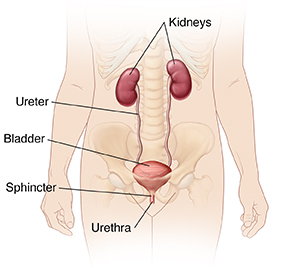
Your urinary tract helps get rid of urine, your body’s liquid waste. The kidneys collect chemicals and water your body doesn’t need. This is turned into urine. Urine travels out of the kidneys through the ureters to the bladder. The bladder holds urine until you’re ready to release it. The urethra carries urine from the bladder out of the body. The main sphincter muscle circles the mid-urethra. It keeps your urethra closed. When you urinate, your brain tells the sphincter to relax so you can release urine.
Featured in
Online Medical Reviewer: Jessica Gotwals BSN MPH
Online Medical Reviewer: Marc Greenstein MD
Online Medical Reviewer: Marianne Fraser MSN RN
Date Last Reviewed: 10/01/2023
© 2000-2026 The StayWell Company, LLC. All rights reserved. This information is not intended as a substitute for professional medical care. Always follow your healthcare professional's instructions.

Related Articles
Vaginal Infection: Understanding the Vaginal Environment
A normal healthy vaginal environment has bacteria and other organisms. If this becomes out of balance, infection can result.
Understanding PMS and Your Cycle
PMS is a real condition caused by changing levels of hormones during your monthly period. No one knows why some women have PMS and others don't.
The Range of Pap Test Results
When your Pap test is sent to the lab, the lab studies your cell samples and reports any abnormal cell changes. Your healthcare provider can discuss these changes with you. In some cases, an abnormal Pap test is due to an infection.
Understanding Menopause
During the months or years before menopause, your body goes through many changes. Read on to understand these changes and what you can do about the symptoms that result.