To treat the problem, keep your eyelids clean. Warm compresses can reduce redness and swelling and help in cleaning your eyelids, too. You may also need to wash the area gently with an eyelid scrub when you wake up.
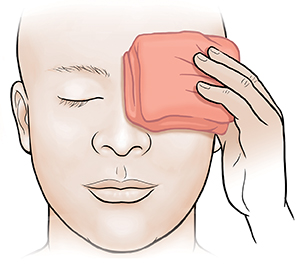
To apply a warm compress:
-
Wash your hands with soap and clean, running water.
-
Wet a clean washcloth with warm water. Then wring it out.
-
Close your eyes and place the warm washcloth over your eyelids for
3 to 5 minutes. This helps loosen scales or crusts. -
Wet the washcloth again as often as needed to keep it warm.
Repeat
To use an eyelid scrub:
-
Wash your hands with soap and clean, running water.
-
Use a ready-made eyelid scrub. Or mix 3 drops of baby shampoo in 1/4 cup of warm water.
-
Dip a lint-free pad, cotton swab, or clean washcloth in the scrub.
-
Close one eye and gently scrub the base of the eyelid.
-
Rinse the lid in cool water and dry with a clean towel.
-
Repeat on your other eye using a clean washcloth or scrub.
Online Medical Reviewer: Chris Haupert MD
Online Medical Reviewer: Raymond Kent Turley BSN MSN RN
Online Medical Reviewer: Rita Sather RN
Date Last Reviewed: 03/01/2024
© 2000-2026 The StayWell Company, LLC. All rights reserved. This information is not intended as a substitute for professional medical care. Always follow your healthcare professional's instructions.
Related Articles
Treating Uveitis
Left untreated, uveitis can lead to vision loss. It's important to seek medical help right away.
Understanding Pneumatic Retinopexy
Pneumatic retinopexy is a procedure to correct a detached retina. It helps to bring back vision. It uses a special tool to repair the retina, and a small bubble of gas to hold the retina in place so it can heal.
Treating Flashes and Floaters
Most often, seeing a few flashes and floaters is normal. Some people may notice them for a while after eye surgery. Most flashes and floaters need no treatment. But sometimes they can be signs of a serious eye problem.
Cataract Treatment: Implanting a New Lens (IOL)
Learn about how a new lens is implanted after cataract surgery.