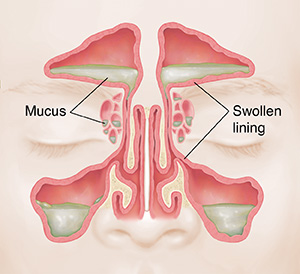
Mucus helps keep your sinuses clean. But mucus may build up in the sinuses because of colds, allergies, or blockages. These things get in the way of the natural drainage of mucus. This may lead to sinusitis. Sinusitis means sinus inflammation and infection.
-
Acute sinusitis may come on suddenly. It often happens right after an upper respiratory infection, such as a cold. Viruses cause most acute sinus infections. But bacteria may also be the cause.
-
Chronic sinusitis is ongoing swelling of the sinus lining. Health experts don't fully understand what causes this.
Colds and other infections
A cold or flu may cause your sinus and nasal linings to swell. Sinus openings can become blocked. This causes mucus to back up. This backed-up mucus becomes an ideal place for bacteria to grow. Thick, yellow, or discolored mucus is one sign of infection.
Allergic reactions
You may be sensitive to certain substances. This causes the release of histamine in the body. Histamine makes your sinus and nasal linings swell. Long-term swelling clogs your sinuses. It prevents the tiny hairs (cilia) in the nasal lining from sweeping away mucus. Allergy symptoms can continue over time. But they’re less severe than with colds.
Blockages
-
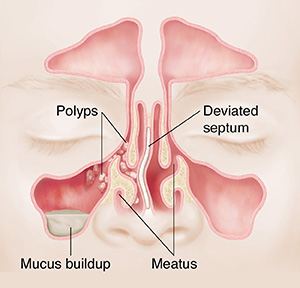
A polyp is a sac of swollen tissue. It can be the result of an allergy or infection. It may block the opening where most of your sinuses drain (middle meatus). It may even grow large enough to block your nose.
-
A deviated septum is when the thin wall inside your nose is pushed to one side. It's often the result of injury. This can block your middle meatus.
People with chronic nasal problems or allergies are more likely to get acute sinusitis. Sinusitis is also more common if you have a weakened immune system, such as with HIV. You're also more likely to get sinusitis if you have cystic fibrosis or another condition that causes your body to make extra mucus.