Recovery

Changing Another Person's Surgical Wound Dressing

Choose a preferred language


Step-by-Step

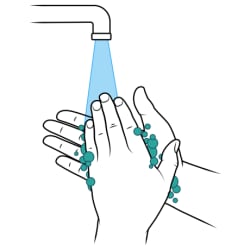
  1. Hands scrubbing with soap under a faucet with running water.

    Wash your hands.

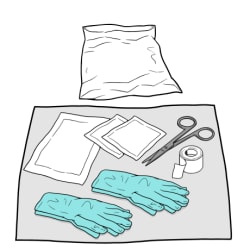
  2. Gauze, scissors, tape, and two pairs of medical gloves laid out on a clean cloth, with a garbage bag nearby.

    Gather your supplies on a clean surface.

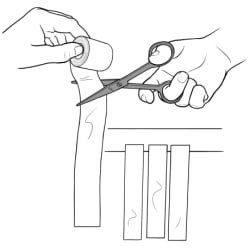
  3. Roll of tape being cut into four strips with scissors.

    Measure and cut the tape.

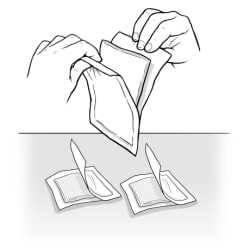
  4. Hands opening package of gauze, and two packages of gauze laid on table, open but still inside package.

    Open the gauze, but don’t take it out.

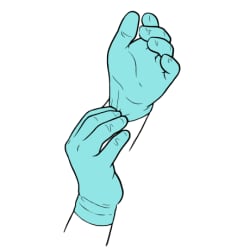
  5. Hands putting on medical gloves.

    Put on gloves.

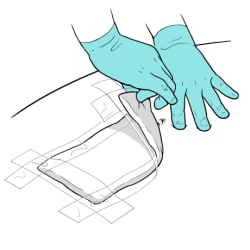
  6. Gloved hands pulling back dressing from one corner toward incision.

    Gently peel off the old dressing, one corner at a time.

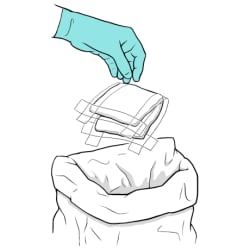
  7. Gloved hand throwing old dressing into trash.

    Put the old dressing in the trash.

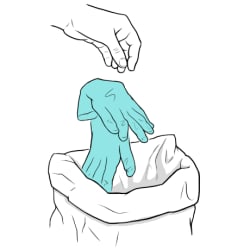
  8. Throwing gloves into trash.

    Put the gloves in the trash.

  9. Hands scrubbing with soap under faucet with running water.

    Wash your hands.

  10. Hands putting on medical gloves.

    Put on new gloves.

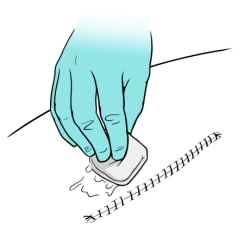
  11. Gloved hand folding gauze and dabbing around incision.

    Clean around the incision with soap and water.

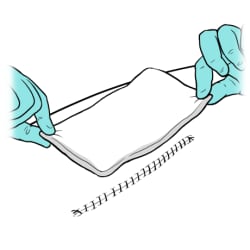
  12. Gloved hands holding gauze from opposite corners and placing it on top of incision.

    Place gauze over the incision.

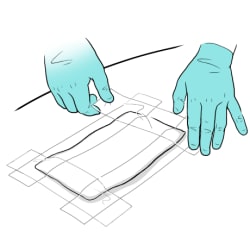
  13. Gloved hands taping each side of gauze to skin.

    Tape the edges of the gauze to the skin.

  14. Throwing gloves into trash.

    Put the gloves in the trash.

  15. Hands scrubbing with soap under faucet with running water.

    Wash your hands.

© 2000-2026 The StayWell Company, LLC. All rights reserved. This information is not intended as a substitute for professional medical care. Always follow your healthcare professional's instructions.
Related Articles
Read article
Surgery
Wound Check After Surgery: Bleeding

It is normal to have some clear or bloody discharge on the wound covering or bandage for the first few days after surgery. Bleeding or discharge needing frequent dressing changes can be a sign of a problem. Read on for details.

Read article
Surgery
Wound Care After Surgery: Pain

It's normal to feel pain at the incision site. The pain decreases as the wound heals. Pain that continues more than a few weeks after surgery or pain that gets worse any time after surgery can be a sign of a problem.

Read article
Surgery
Discharge Instructions: Caring for Your Hemovac Drainage Tube

A Hemovac drainage tube is used to remove fluid and is attached to a drain or collection device. This sheet can help you care for your Hemovac tube.

Read article
Surgery
Having Female-to-Male Subcutaneous Mastectomy and Chest Contouring

Subcutaneous mastectomy and chest contouring is done to give a person a more male-looking chest.