Your heel is the back part of your foot. A band of tissue called the plantar fascia connects the heel bone to the bones in the ball of your foot. Nerves run from the heel up the inside of your ankle and into your leg. When you feel pain in the bottom of your heel, the plantar fascia may be inflamed. Overuse, Achilles tightness, and excess body weight can cause the tissue to tear or pull away from the bone. Sometimes the inflamed plantar fascia also irritates a nerve, causing more pain.
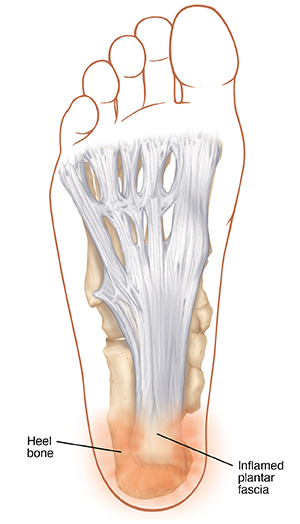
What causes heel pain?
Wearing shoes with poor cushioning can irritate the tissue in your heel (plantar fascia). Being overweight or standing for long periods can also irritate the tissue. Running, walking, tennis, and other sports that put stress on the heels can cause tiny tears in the tissue. If your lower leg muscles are tight, this is more likely to happen. A tight Achilles tendon will also add to heel pain.
Symptoms
You may feel pain on the bottom or on the inside edge of your heel. The pain may be sharp when you get out of bed or when you stand up after sitting for a while. You may feel a dull ache in your heel after you’ve been standing for a long time on a hard surface. Running can also cause a dull ache.
Preventing future problems
To prevent future heel pain, wear shoes with well-cushioned heels. And do exercises prescribed by your doctor to stretch the Achilles tendon and the muscles in the lower leg.
Find the Right Orthopedic & Sports Medicine Specialist for You
BLANCHARD VALLEY HEALTH SYSTEM
Ortho LinkRelated Articles
Understanding Meniscal Tears
A sudden injury can tear the meniscus. This is often because of planting the foot and twisting the knee. Sports, such as soccer, football, and basketball, are often involved.
Baker’s Cyst
You have a Baker's cyst. This is a lump in the back of your knee that is caused when extra joint fluid flows into a small sac behind the knee.
Shoulder Dislocation
A dislocated shoulder means the upper arm bone (humerus) has moved out of the shoulder joint. It can cause pain, swelling, numbness and trouble moving the shoulder.
Fluid on the Knee
Fluid on the knee is also called knee effusion. Learn how to care for yourself at home as you heal.