After hip replacement, you’ll likely use a walker to get around while you recover. There are a few types of walkers:
-
The standard nonrolling walker
-
The 2-wheeled (front) rolling walker
-
The 4-wheeled rolling walker
Your physical therapist or occupational therapist will teach you how to use a walker safely and help you choose the best one for you. Later, you may change from a walker to crutches or a cane.
Using a walker
-
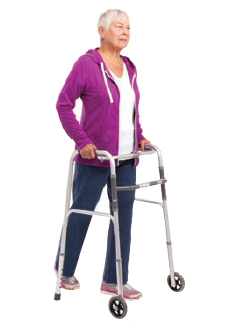
Move the walker a few inches in front of you.
-
Lean on the walker so it supports you. Step into the center with your operated leg. Then step forward with your good leg. Repeat.
-
As you get more comfortable, you’ll be able to move the walker as you step.
Walking up a curb
-
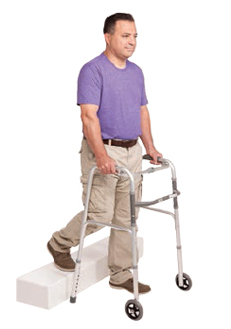
Move your feet and walker as close to the curb as possible.
-
Put your weight on both legs, and then lift the walker onto the curb.
-
Step on the curb with your good leg. Using the walker to support your weight, bring up your operated leg.
Walking down a curb
-
Move your feet and walker as close to the curb as possible.
-
Lower the walker onto the ground, keeping its back legs against the curb.
-
Using the walker to support your weight, lower your operated leg. Then step down with your good leg.
-
Never climb stairs or use an escalator with your walker.
Find the Right Orthopedic & Sports Medicine Specialist for You
BLANCHARD VALLEY HEALTH SYSTEM
Ortho LinkRelated Articles
After Hip Replacement: Continuing With Hospital Recovery
After hip replacement surgery, you can leave the hospital when your health is stable, your pain is controlled, and you're able to walk safely, including up and down stairs. Here are some tips to continue your recovery at home.
Cast Care: When Your Cast Comes Off
Just because your cast is off, it doesn't mean that your recovery is over. Your bone is still growing stronger and you need to care for your injury.
What to Expect: The Months After Amputation Surgery
Here's what to expect in the months after amputation surgery.
Exercise After Knee Replacement Surgery
Strong, flexible muscles help protect your knee. Improve your strength and increase your range of motion by doing the exercises shown here.