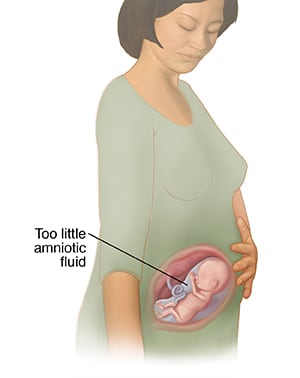
Your doctor has found that you have too little amniotic fluid in your uterus. This condition is called oligohydramnios. Amniotic fluid surrounds and protects the baby as they develop. It helps the baby's muscles, lungs, and digestive tract develop correctly. When this condition is found, it changes the way the pregnancy is managed, even if the pregnancy is otherwise healthy. Low fluid makes the pregnancy complicated. In an otherwise healthy pregnancy, the problem may not need treatment.
What causes oligohydramnios?
This condition is most common during the last trimester and in pregnancies carried beyond term. This is because amniotic fluid levels naturally decline after 41 weeks. If the problem happens earlier in your pregnancy, it may be due to a health problem in you or your baby. If diagnosed, it would be important to find out if your amniotic sac has broken. But often the cause of the low fluid levels is not known.
How is oligohydramnios diagnosed?
An ultrasound is done to measure the amount of amniotic fluid in your uterus. The ultrasound uses sound waves to create detailed images of the inside of your uterus. During the ultrasound test, the amount of amniotic fluid is measured, most often through a method called amniotic fluid index (AFI). Oligohydramnios is considered present if the AFI shows a fluid level less than 5 cm.
How is oligohydramnios treated?
In some cases, drinking more fluids can help increase the level of amniotic fluid. Beyond that, your health and the health of your baby is checked. You will have regular ultrasounds to keep track of your amniotic fluid level. Fetal stress tests may also be done. These tests check your baby's health. In many cases, no treatment is needed. If your doctor decides that treatment is needed, it may include:
- Bed rest at home or a stay in the hospital. During this time, your health and your baby's health are watched closely.
- I.V. fluids. A tube is put into your arm or hand to give you fluids.
- Amnioinfusion. This increases the amount of fluid in your uterus by adding (infusing) sterile saltwater (saline solution). It can only be used during labor and delivery.
- Induction of labor. This may be done if your pregnancy is at term or beyond. Your doctor will tell you more about this if it is needed.
Follow-up care
If you or your baby has a condition that has caused the low amniotic fluid level, the condition will be treated. Your doctor can tell you more about the cause of your low amniotic fluid level. They can also discuss treatment choices with you.
When to contact your doctor
Contact your doctor now or seek immediate medical care if:
- You have a fever of 100.4°F (38°C) or higher, or as advised by your doctor.
- You have sudden or severe belly (abdominal) cramping.
- You have fluid leaking from the vagina.
- You have regular, rhythmic contractions.
- Your baby is moving less than before.

Related Articles
PUPPP (Pruritic Urticarial Papules and Plaques of Pregnancy)
PUPPP is a very common skin rash that can occur later in pregnancy. It goes away after the baby is born. Learn about how you can ease the itching it causes.
Anemia During Pregnancy
Anemia during pregnancy is often caused by not having enough iron in the blood. It is common in pregnancy and very easy to treat.
Polyhydramnios
Having too much amniotic fluid in your uterus during pregnancy is called polyhydramnios. Learn why this happens and how to manage it.
Hyperemesis Gravidarum
Hyperemesis gravidarum is a severe form of morning sickness that can affect some women during pregnancy. Symptoms include severe nausea and vomiting.