What are newborn screening tests?
The United States has a national program of newborn screening tests. These check for health disorders that can be treated if they're found very early in life. If the screening test results are abnormal, it means more tests need to be done to tell if the baby has a disorder. The specific tests that are recommended for newborns in the U.S. may vary by state or territory.
The baby's blood is used to test for most of the disorders. A heel-prick is used to sample the baby's blood. The blood is then sent to a state lab for testing. The baby's heel may have some redness at the pricked site. Some babies may have bruising, but this usually goes away in a few days.
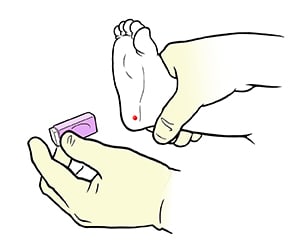
Blood tests for newborn screening check for:
- Phenylketonuria (PKU). PKU is an inherited disease in which the body can't metabolize a protein called phenylalanine. Without treatment, PKU can cause intellectual disability.
- Congenital hypothyroidism. This is a condition in which the baby is born with too little thyroid hormone. Hypothyroidism is also quite common. Untreated low thyroid hormone levels can lead to developmental problems and poor growth.
- Galactosemia. This is an inherited disorder in which the baby is unable to metabolize galactose, a milk sugar. Without treatment (avoidance of milk and milk products), galactosemia can be life-threatening. Symptoms may start in the first 2 weeks of life.
- Sickle cell disease. This inherited disorder causes a severe form of anemia. Early diagnosis of sickle cell disease can help lower some of the risks, which include severe infections, blood clots, and stroke.
- Maple syrup urine disease. This inherited disorder is caused by an inability of the body to properly process parts of protein called amino acids. The name comes from the odor of maple syrup in the baby's urine caused by the abnormal protein metabolism. If untreated, it's life-threatening as early as the first 2 weeks of life. Even with treatment, severe disability and paralysis can occur.
- Homocystinuria. This inherited disorder can cause intellectual disability, bone disease, and blood clots. It's caused by a deficiency of an enzyme needed to break down an amino acid called homocysteine.
- Congenital adrenal hyperplasia. Babies born with congenital adrenal hyperplasia (CAH) can't make enough of the hormone cortisol. Cortisol helps control many things, including energy, sugar levels, blood pressure, and how the body responds to the stress of injury or illness.
- Medium chain acyl-CoA dehydrogenase deficiency (MCAD). This is a disorder of fatty acid oxidation. It can cause sudden death in infancy and serious disabilities in survivors, such as intellectual disability.
- Cystic fibrosis. This condition causes serious lung and digestive problems. If diagnosed early, treatment can begin that may slow the progress of symptoms.
- Severe combined immunodeficiency (SCID). Babies with this disorder are unable to fight infection. There is a high rate of death from the condition. If it's diagnosed early, a bone marrow transplant may be done.
Other conditions screened with different methods include:
- Hearing loss. Hearing is checked using a special tool.
- Critical congenital heart disease. The level of oxygen in the baby's blood is checked with a device called a pulse oximeter. If the level is lower than expected, the baby may have a heart condition that needs urgent surgery.
Most heel-prick screenings can't be done until a baby has been eating for at least 24 hours. This is because it takes that long for abnormal levels to show up in the blood. The hearing and heart disease tests are also less reliable in the first 24 hours. Your baby may need follow-up testing if you are discharged before this time, or if the baby can't be tested before discharge. Some states mandate a second blood test to be done at 2 weeks of age. Ask your baby's doctor if you have any questions about the screening tests done.
Featured in