Hypothyroidism is a condition in which the thyroid gland does not make enough thyroid hormone. Congenital hypothyroidism is when the disorder is present in a baby at birth. It can lead to serious health problems if not treated.
What does the thyroid do?
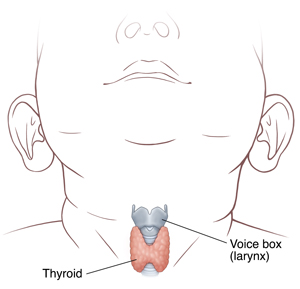
The thyroid is a butterfly-shaped gland in the neck, just below the voice box. The thyroid gland makes thyroid hormone. This hormone helps control the metabolism. Metabolism is the rate at which every part of the body functions. Thyroid hormone keeps the metabolism at a healthy pace. This helps the brain, heart, muscles, and other organs work well. Normal metabolism supports a healthy temperature, heart rate, energy level, and growth rate. Serious problems in brain development may occur if a baby does not make enough thyroid hormone. These include learning problems, growth delays, or hearing loss.
What causes congenital hypothyroidism?
In most cases, this condition occurs because the thyroid doesn't form normally before birth. In other cases it can occur because the child's thyroid doesn't make thyroid hormones. Or it may be because of the pregnant person's treatment for a thyroid problem before or during pregnancy.
What are the symptoms of congenital hypothyroidism?
A newborn often has no symptoms at first. Symptoms can vary with each child.
Symptoms in newborns can include:
-
Yellowing of the skin and eyes (jaundice).
-
A hoarse-sounding cry.
-
Trouble feeding.
-
Excessive sleeping.
-
Bellybutton that sticks out too far (umbilical hernia).
-
Constipation.
-
Weak muscles.
-
Lack of energy.
-
A large thick tongue.
-
Large fontanels. These are depressions between the bones of the skull.
-
Dry or cold skin.
How is congenital hypothyroidism diagnosed?
By law in the U.S. and many other countries, all newborns are screened in the first few days of life for serious diseases. The tests are done on a few drops of blood taken from the baby’s heel. One test is for thyroid function.
The blood is tested to measure amounts of thyroid-related hormones. It is also tested for amounts of hormones that tell the thyroid to make more hormones.
Your baby’s health care provider may also advise an imaging test for more information if necessary.
How is congenital hypothyroidism treated?
This condition is treated by giving your child synthetic thyroid hormones (levothyroxine) every day. Your child will likely need to take this hormone for life. Levothyroxine should be crushed and given once daily, mixed with a small amount of water, formula, or breast milk using a teaspoon, dropper, or syringe. Levothyroxine should not be mixed with a soy protein formula, because the medicine may not be absorbed as well.
In a few cases, the thyroid gland may start working again by age 3. The thyroid gland will be tested over time with blood tests. This can show if the thyroid starts working on its own. It can also make sure that the dose is still correct or tell if it needs to be adjusted. Your child’s growth and development will also be tracked over time. Your child should never stop taking thyroid hormone unless told to do so by their health care provider.
Featured in
Author: Wheeler, Brooke
© 2000-2026 The StayWell Company, LLC. All rights reserved. This information is not intended as a substitute for professional medical care. Always follow your healthcare professional's instructions.