Ptosis is when the upper eyelid droops down. It's also called blepharoptosis. If the ptosis is severe, it may block vision. The main muscle that opens the eyelid is called the levator palpebralis. Another muscle that helps the eye open is called the superior tarsal muscle. If there is a problem with either of these muscles or their nerves, ptosis can result.
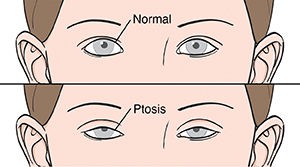
What causes ptosis?
A child may be born with ptosis. This is most often because of poor growth of the levator palpebralis muscle. Ptosis may also be caused by problems with the tendon attached to the superior tarsal muscle. It may be caused by problems with nerves, such as the third cranial nerve. Or it may be caused by a rare disorder. Some kinds of ptosis may run in families. If another family member has ptosis, you or your child may be more likely to have it.
Diagnosing ptosis
Diagnosis starts with a medical history and physical exam by an eye care provider (ophthalmologist). This will include a complete eye exam. Your child may have tests to help diagnose the cause. These may include imaging tests such as:
-
CT scan
-
MRI
-
Magnetic resonance angiography (MRA)
Treatment for ptosis
If your child has ptosis at birth, the eye care provider may choose to watch your child for vision problems. In some cases, ptosis gets better over time. If the ptosis doesn’t get better, your child may need surgery.
If your child’s ptosis is severe, the eye care provider may advise surgery right away especially if the eyelid is blocking your child’s vision. Severe ptosis may delay visual development in a child.
Your child may also need treatment for the other symptoms that can occur with ptosis. Your child may need to wear glasses to correct a common problem called astigmatism. If your child develops lazy eye (amblyopia), they may need to wear an eye patch over the normal eye.
Follow-up care
Work with your child’s eye care provider to make sure the ptosis does not affect your child’s vision over time.
Featured in